Summary:
Short cycling happens when a well pump turns on and off in rapid bursts. Common causes include a waterlogged tank, a failed air bladder, incorrect air pre-charge, a faulty pressure switch, and leaks. Simple pressure-gauge checks point to the likely problem. Quick action protects the pump motor, which can overheat and fail under constant restarts.
A healthy well system works quietly, then rests. A struggling system clicks on and off like a nervous heartbeat, and each click wears down the pump motor. That clicking has a name, a list of causes, and fixes you can understand without a plumbing degree.
This guide explains the causes of well pump rapid cycling and which parts fail first. It also covers simple tests to identify each problem and the settings that keep your pump calm. You’ll learn when a quick, safe adjustment is enough and when a professional should take over to protect your equipment long term.
What Is Well Pressure Tank Short Cycling?
Well pressure tank short cycling happens when your pump turns on, runs for only a few seconds, shuts off, and starts again almost right away. Normally, the pump fills the tank until pressure reaches the cut-out point, then rests while stored water serves your taps. When the tank cannot hold enough usable water, the pump restarts again and again.
The air cushion inside the tank is the key. It acts like a spring, pushing water to your taps while the pump rests. Without enough air, pressure falls fast, and each restart heats the motor, which can shorten the pump’s life and raise your power bill. Listen for rapid clicking near the tank, and watch for surging faucet pressure.
Common Causes of Well Pump Rapid Cycling
Most cases trace back to a short list of culprits, so work through them one at a time.
A Waterlogged Pressure Tank
A waterlogged tank has lost its air cushion and filled with water. With little cushioning left, the pump may reach cut-out pressure quickly and cycle frequently. This is a leading cause of short cycling.
A Ruptured or Stuck Air Bladder
Most modern tanks use a rubber bladder to keep air and water apart. When the bladder ruptures, air and water can mix, reducing the tank’s ability to maintain pressure. A bladder that sticks to itself can cause similar trouble.
Wrong Air Pre-Charge
Tank air pressure should sit about 2 psi below the pump’s cut-in setting. An incorrect pre-charge can reduce usable tank drawdown and contribute to frequent cycling. Air can leak slowly through the valve, so the charge drifts over time.
A Faulty Pressure Switch
A pressure switch can wear out, collect sediment, or burn its contacts, sending the wrong signal. A faulty pressure switch can cause the pump to start or stop incorrectly. Because a bad tank causes the same symptom, test the tank first before blaming the switch.
Leaks in Pipes or Fixtures
Even a small leak slowly drops pressure, and the switch restarts the pump to replace the lost water. A running toilet can trigger several cycles every hour. Check faucets and toilets first, then have a pro inspect the well piping.
A Pump That Outruns the Tank
A pump that delivers more water than your tank can absorb fills the tank in seconds. An undersized tank or an oversized pump creates this mismatch. Low well yield can create a similar mismatch and may require professional diagnosis.
A stubborn switch deserves a professional eye before it costs you a pump. 77 Water Well offers professional well pressure switch repair that restores steady control over when your pump starts and stops. Reach out today and keep your pump running smoothly!
How to Test Waterlogged Pressure Tank Issues
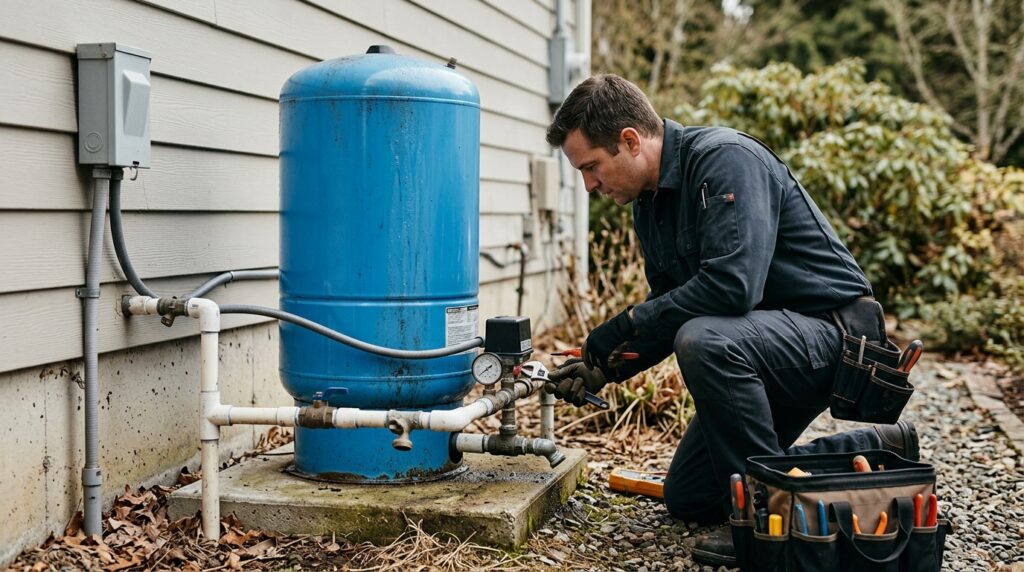
Start with safety. Turn off power to the pump at the breaker, then open a faucet and drain the tank until the pressure gauge reads zero. You must depressurize the tank, or your air reading will be wrong.
Next, press a tire gauge on the air valve at the top of the tank. For a 30/50 switch, expect about 28 psi. A zero reading may indicate lost air charge or a tank problem. Water coming from the air valve strongly suggests bladder failure.
Confirm with a water test. Turn the power back on and watch the cycle. If the pump shuts off within seconds of starting, the tank cannot hold enough water.
Watch the pressure gauge while the pump runs. If the needle swings between the cut-in and cut-out marks within seconds, it confirms rapid cycling.
Adjusting Well Pressure Switch Settings
Common switch pairs are 30/50 and 40/60, which means the pump starts at the first number and stops at the second. Keep at least 20 psi between the two, or the tank cannot store enough water between cycles.
Cut power before you touch the switch cover. Make small changes, test the pressure with a gauge, and repeat until the pump starts at your desired setting. After any change, reset the tank air pressure to 2 psi below the new cut-in point. If the switch will not hold a setting, call a licensed pro.
Short Cycling Symptoms and Likely Fixes
Use the symptom-and-fix table below to narrow down the likely cause of well pump short cycling and identify the appropriate next step.
| Symptom | Likely Cause | Typical Fix |
| Rapid clicking, pressure surges | Waterlogged tank | Recharge air or replace tank |
| Water at the air valve | Failed bladder | Replace the tank |
| Pump restarts with no water use | Leak in plumbing or fixture | Repair the leak |
| Low or high air gauge reading | Wrong pre-charge | Reset to 2 psi below cut-in |
| Pump stops too soon, tank tests fine | Faulty pressure switch | Repair or replace the switch |
| Short cycles with strong flow | Oversized pump or small tank | Add a larger tank |
Simple Tips to Prevent Short Cycling
A few easy habits can keep your pump resting longer and your system healthier.
- Check the tank’s air pressure a few times a year with the power off and the system drained to zero, and keep it about 2 psi below the cut-in setting.
- Fix leaking faucets and running toilets quickly, because small leaks can make the pump restart many times each day.
- Keep at least 20 psi between the cut-in and cut-out settings so the tank can store enough water.
- Match your tank size to your pump, since a tank that is too small fills in seconds and forces constant restarts.
- Listen for fast clicking near the tank and watch for surging pressure, then act early before the motor overheats.
- Follow the manufacturer’s maintenance recommendations and replace the tank when its condition or performance warrants replacement.
Frequently Asked Questions
What causes well pump rapid cycling?
A waterlogged tank, a failed bladder, wrong air pre-charge, a faulty pressure switch, leaks, and a pump that is too big for the tank.
Why does checking pressure tank air bladder matter?
Air pressure sets how much water the tank can store. A low or high reading can make the pump restart too quickly.
Is it safe to adjust well pressure switch settings myself?
Only if you cut power first, make small changes, and feel comfortable around electrical parts. Otherwise, call a licensed pro.
Can short cycling damage my pump?
Yes. Constant restarts overheat the motor and shorten the pump’s life.
When should I replace the pressure tank?
Replace the tank when its shell fails or its condition warrants replacement; if the tank design permits, replace a failed bladder separately.
Conclusion
Short cycling is a signal, not a mystery. Start with the tank, because a lost air charge or a failed bladder is a leading cause. Learning how to test waterlogged pressure tankissues takes only a gauge and a little time. Then check the switch, hunt for leaks, and match your tank to your pump. Quick action keeps the motor cool, trims your power bill, and protects the water supply your family counts on.
A calm pump is the first goal, and a clear repair plan is the next. 77 Water Well serves homes and businesses around Magnolia, Texas, with honest well and pump repair. For more information, see our guide on “well pump replacement vs rehabilitation“.