Most people associate brutal winter freezes with northern states, not Texas. But anyone who lived through Winter Storm Uri in 2021 knows that is a dangerous assumption. That storm left millions without power, burst countless pipes, and reminded every Texas homeowner — including private well owners — that freeze preparation is not optional.
For families who rely on a private water well, a freeze event is especially serious. When municipal water lines freeze, the city works to restore service. When your well system freezes, the entire household loses water. No showers, no drinking water, no flushing toilets. And the damage does not stop there. Frozen pipes can rupture underground, pump components can crack, pressure tanks can fail, and the cost of emergency repairs in freezing conditions escalates quickly.
The North Houston area may not see snow every winter, but hard freezes are a recurring reality. This guide walks through exactly how to winterize your water well system — from the wellhead to the pressure tank to every inch of exposed plumbing — so you are ready before the temperature drops.
Why Texas Wells Are Especially Vulnerable to Freezing
Water well systems in Texas are often built differently than those in consistently cold climates. In northern states, wells are typically constructed with deep frost lines in mind — pump equipment is buried well below the freeze depth, and all exposed components are designed for sub-zero temperatures. In Texas, our frost line is much shallower, which means components like the pressure tank, pressure switch, and sections of plumbing are routinely installed in uninsulated well houses, above-ground pump sheds, or exposed outdoor locations.
Add to that the fact that most Texas homeowners simply do not think about winterizing until it is too late, and you have a recipe for thousands of freeze failures every time a hard cold snap rolls through. The good news is that most freeze damage is entirely preventable with preparation that takes less than a weekend.
Before the Freeze: How to Winterize Your Well System
Start these preparations at least a few days before a forecasted hard freeze so you have time to gather materials and address anything you discover during the inspection. Do not wait until the night before.
1. Insulate All Exposed Pipes and Fittings
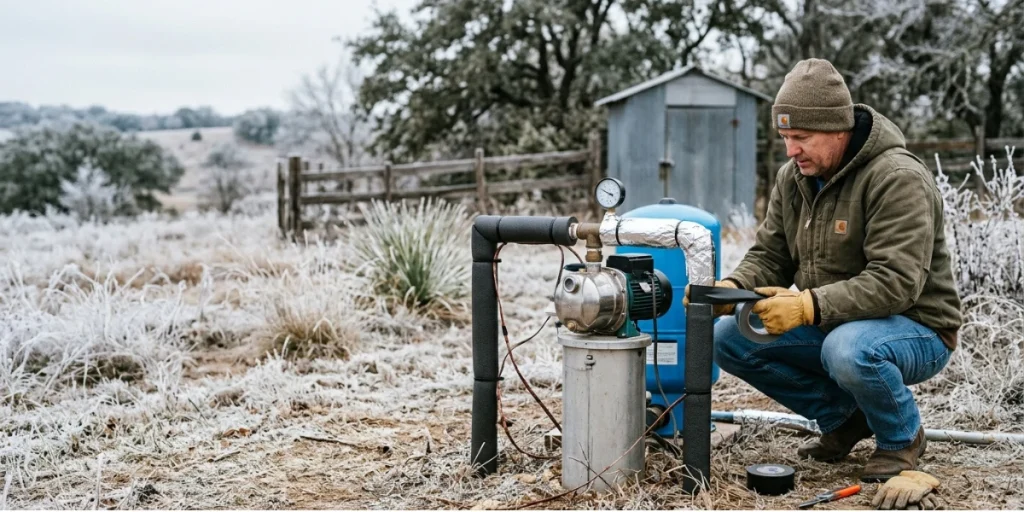
Walk the entire length of exposed plumbing between your wellhead and your home. Look at every inch of pipe, every elbow joint, every shutoff valve, and every hose bib. Any section of pipe or fitting that is not buried underground or inside a heated space needs insulation. Use foam pipe insulation sleeves — they are inexpensive, available at any hardware store, and slide on easily. For oddly shaped fittings and valves, wrap them tightly with fiberglass pipe wrap or foam insulating tape. Pay special attention to backflow preventers, which are notorious for freezing because they trap water inside their internal chambers.
2. Build or Upgrade Your Well House
A well house — even a simple insulated box built around the wellhead and pressure tank — is the single most effective layer of freeze protection you can invest in. A properly constructed well house does not need to be actively heated. The thermal mass of the insulated walls combined with the small amount of heat radiated by the pressure tank and pump equipment is often enough to keep the interior above freezing even when outside temperatures dip into the teens. If your existing well house has gaps, cracks, or missing insulation, seal them up. Use rigid foam board insulation on the interior walls and weatherstripping around the door. A well-sealed, insulated enclosure is dramatically more effective than wrapping individual components.
3. Protect the Pressure Tank and Pressure Switch
The pressure tank and pressure switch are two of the most freeze-sensitive components in your system. The pressure switch contains a small diaphragm that senses water pressure. If water inside the switch housing freezes, the diaphragm can rupture, and the switch will fail — cutting off your pump entirely. Wrap the pressure switch with insulation, but do not seal it so tightly that you cannot remove the insulation later for maintenance. For the pressure tank, wrap the bottom and sides with a thermal blanket or fiberglass batt insulation, leaving the top accessible. If the tank is installed outdoors, consider adding a heat lamp or a 100-watt incandescent bulb inside the well house as a gentle, continuous heat source during extreme cold events. Position it so it does not touch anything flammable and secure it against being knocked over.
4. Drain and Disconnect Outdoor Hoses and Irrigation
Every garden hose, drip irrigation line, and outdoor spigot connected to your well system is a freeze risk. Disconnect all hoses and drain them completely. Shut off the water supply to outdoor spigots from inside the house or inside the well house if a shutoff valve exists. Then open the spigot to drain any remaining water. Standing water inside a hose bib that is connected to your well plumbing can freeze back into the supply line and cause a split pipe underground — a repair nobody wants to deal with in freezing weather.
5. Seal the Wellhead Opening
Inspect the well cap and the point where the electrical conduit and water pipe enter the top of the well casing. The well cap should be securely fastened with a watertight seal. If there are gaps where the conduit enters, seal them with silicone caulk or expanding foam rated for outdoor use. A small gap is not just a cold air entry point — it is also an opening that allows insects and rodents to seek warmth inside your well during winter, creating a different set of problems entirely.
6. Mark the Location of Underground Shutoff Valves
If your well system has an underground shutoff valve between the wellhead and the house, make sure you know exactly where it is before the freeze hits. Mark it with a stake, flag, or reflective marker. If a pipe bursts during or after the freeze, the very first thing you will need to do is shut off the water at the source. Digging through frozen ground searching for a valve box while water is gushing somewhere is a nightmare scenario. A clearly marked shutoff valve location saves critical minutes.
7. Stock Emergency Supplies
Ahead of any predicted hard freeze, fill several clean containers with drinking water — a gallon per person per day is the recommended minimum, with a three-day supply as a conservative target. Fill bathtubs with water for flushing toilets if power loss knocks out your pump. Have spare pipe insulation, foam wrap, and a portable heat source rated for indoor use on hand. Keep a list of emergency contacts, including 77 Water Well’s phone number, saved somewhere accessible offline — not just on your phone.
During the Freeze: Active Protection Measures
Once the temperature drops below freezing, there are a few additional measures that can help prevent damage in real time.
1. Let Faucets Drip
Choose the faucet farthest from your pressure tank and let it drip — both hot and cold lines. A slow, steady drip keeps water moving through the pipes, and moving water freezes at a much lower temperature than standing water. A drip the width of a pencil lead is enough. This approach costs a small amount of water but can save thousands of dollars in plumbing repairs.
2. Open Cabinet Doors
If any plumbing runs through exterior walls, open the cabinet doors underneath sinks to allow warm indoor air to circulate around the pipes. This is particularly important in kitchens and bathrooms that sit against the exterior of the house.
3. Monitor Your Pressure Gauge
Check the pressure tank gauge periodically. Sudden pressure loss may indicate a frozen section of pipe that is blocking flow. Catching a freeze blockage early — before the ice expands enough to burst the pipe — gives you a chance to apply localized heat and restore flow before permanent damage occurs.
After the Freeze: Inspecting for Damage
Once temperatures rise above freezing and stay there, it is time for a thorough inspection. Even if your water seems to be working normally, hidden damage can manifest days or weeks later.
1. Visually Inspect All Exposed Components
Walk the entire well system — wellhead, pressure tank, pressure switch, all exposed pipes, every valve, and every connection point. Look for ice, frost residue, water droplets, or mineral deposits that suggest a slow leak. Check the ground around the wellhead and along the pipe trench for soft or unusually wet patches, which may indicate a buried pipe rupture.
2. Listen for Unusual Sounds
Turn on a faucet and listen. Air sputtering, banging in the pipes, or a pump that cycles on and off rapidly are all red flags after a freeze. Banging in the pipes — called water hammer — often indicates a section of pipe partially blocked by ice or debris. Sputtering air suggests a leak in the suction line or a cracked component drawing air into the system.
3. Check the Pressure Tank
Tap on the side of the pressure tank. You should hear a hollow, drum-like sound in the upper portion and a dull, solid sound in the lower portion where the water is. If the entire tank sounds solid or if you hear no difference at all, the tank’s internal bladder or diaphragm may have been compromised by freezing — even if the tank itself looks fine from the outside.
4. Run a Water Quality Test
A freeze event that cracks the well casing or damages the well cap can allow surface water and contaminants to enter your well. After a hard freeze, it is a wise precaution to test your water for coliform bacteria and E. coli. This is especially important if you notice any change in your water’s taste, smell, or clarity in the weeks following a freeze.
5. Do Not Ignore Small Signs
A small drip, a faint hissing sound, or a pump that runs a few seconds longer than it used to — these are not minor annoyances. They are early warnings. Freeze damage does not always result in a dramatic burst pipe and a flooded yard. More often, it creates small cracks that slowly worsen over time. Addressing them early means a simple repair instead of an emergency call at 2 AM during the next cold front.
Common Mistakes That Make Freeze Damage Worse
Homeowners trying to do the right thing sometimes make errors that compound the problem. Here are the most common ones to avoid:
- Using an open flame to thaw frozen pipes. Do not use a propane torch, a heat gun set too high, or any open flame. PVC pipes can melt or ignite, and enclosed spaces like a well house may contain flammable vapors. Use a hair dryer, a heat lamp, or a space heater at a safe distance instead.
- Wrapping pipes with wet insulation. Insulation that gets wet — from rain, snow, or a small leak — loses nearly all of its insulating value. If the insulation on your pipes is damp, replace it with dry material before the freeze hits.
- Forgetting about livestock water systems. If your well also supplies water to livestock troughs, automatic waterers, or barn hydrants, those lines need the same freeze protection as the residential plumbing. A frozen stock tank line is often forgotten until the animals are without water.
- Shutting off the well pump entirely during a freeze. Some homeowners think shutting the pump off prevents damage. It does not — water remaining inside pipes and the pressure tank will still freeze. Keep the system pressurized and flowing during a freeze.
- Assuming a well house with no insulation is enough. An uninsulated wooden box provides almost no freeze protection. In a sustained hard freeze, the interior temperature of an uninsulated well house will match the outside temperature within hours.
A Note About Generators and Backup Power
A freeze event in Texas often comes with widespread power outages. If your well pump has no power, you have no running water — even if the plumbing itself is perfectly protected from freezing. A properly sized portable generator can run your well pump, keeping water flowing and pressure maintained throughout a power outage. If you invest in a generator, have an electrician install a transfer switch so you can safely connect the pump without backfeeding the grid. Test the setup before winter, not during an emergency. And never run a generator indoors or inside a well house — carbon monoxide poisoning kills more people during winter storms than the cold itself.
When to Call a Professional
Some freeze-related issues are not DIY repairs. Contact a licensed well professional in North Houston if you experience any of the following after a freeze:
- A sudden total loss of water pressure that does not return after temperatures rise above freezing
- Water that runs brown, cloudy, or contains visible sediment after the freeze passes
- A pressure tank that hisses, leaks water from the air valve, or feels completely waterlogged
- A pump that runs continuously without building pressure
- Visible cracks on the well casing, well cap, or pressure tank housing
- Any electrical issue — burning smells, tripped breakers that will not reset, or visible damage to wiring near the wellhead
77 Water Well has helped homeowners across Magnolia, Conroe, Tomball, Cypress, Katy, and the greater North Houston area recover from freeze damage and prepare for future cold weather. Our licensed technicians can assess your entire well system, identify vulnerabilities, and perform the necessary repairs or upgrades to ensure your family has water through every season.
Conclusion
Winterizing a private water well in Texas is not complicated, but it does require attention to detail and a willingness to act before the weather turns. The cost of insulation, foam wrap, and a few hours of preparation is trivial compared to the cost of emergency freeze repairs. Replace a burst pressure tank, and you will wish you had spent the fifty dollars on insulation a week earlier.
The reality is that Texas will experience more hard freezes. The climate patterns that brought Winter Storm Uri have not disappeared — they have repeated in smaller ways almost every winter since. The difference between a household that sails through the next freeze without incident and one that spends days without water and thousands of dollars on repairs is almost always preparation, not luck.
So take a walk around your well system this week. Inspect it, insulate it, and seal it up. Then when the next freeze is forecasted, you can watch the weather reports with confidence instead of anxiety.
If you need help winterizing your well system or recovering from freeze damage, contact the water well company Houston Texas trusts. Call 77 Water Well today to schedule a winterization inspection and make sure your well is ready when the temperature drops.