Owning a private water well in Texas puts you in charge of your own water supply. That comes with real responsibility, but it also comes with a common question: what can I actually do myself, and what should I leave to a professional?
The good news is that there are several simple maintenance tasks homeowners can perform on their own to keep their well system in better shape between professional visits. The important part is knowing exactly where that line is. Some tasks are safe, easy, and genuinely helpful. Others look approachable on the surface but can cause serious damage to your well, your water quality, or even your health if done incorrectly.
This checklist breaks it down clearly so you know exactly where you stand.
What Homeowners Can Safely Do Themselves
These are routine checks and low-risk tasks that require no specialized equipment or training. They are habits that any well owner in North Houston can build into a regular schedule.
1. Inspect the Wellhead and Well Cap Regularly
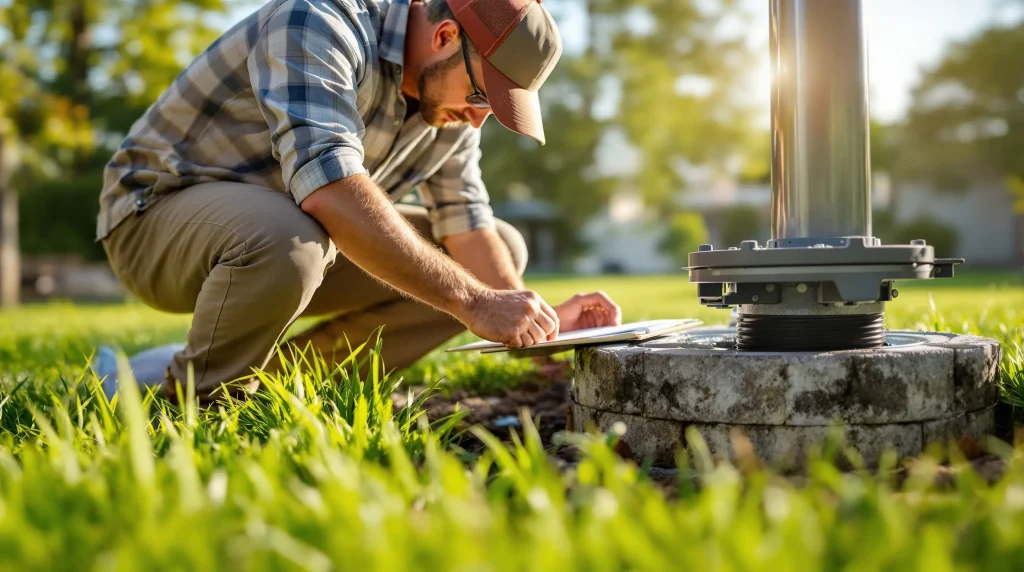
Walk out to your wellhead every few months and give it a visual once-over. You are looking for cracks in the well cap, damaged seals, signs of rust on the casing, or any debris piled up around the base. A properly sealed wellhead is your first line of defense against surface contaminants, insects, and rodents entering your water supply. If the well cap is loose, cracked, or missing, that is something to flag immediately — even if you are not the one to fix it.
2. Keep the Area Around the Wellhead Clear
Maintain at least a 10-foot clearance around your wellhead. Remove leaves, brush, mulch, and any material that holds moisture against the casing. Make sure lawn sprinkler heads are not directed toward the well. Avoid storing pesticides, fertilizers, or fuel anywhere near the wellhead. These are simple steps that dramatically reduce the risk of surface contamination reaching your groundwater.
3. Check Your Water Pressure Regularly
Get familiar with what normal water pressure feels like in your home. Check pressure at multiple fixtures over time and note any gradual decline. You do not need a gauge to do this — you will notice it in your shower, your garden hose, and your kitchen faucet. Pressure changes are often early signs of a problem with your pump or pressure tank, and catching them early gives you more time to act before a breakdown happens.
4. Monitor the Pressure Tank Gauge
Your pressure tank usually has a visible gauge. Normal residential well systems operate between 40 and 60 PSI. If your gauge reads significantly lower or higher than that range, or if it seems to be swinging up and down in short intervals, make a note of it and call a professional. You do not need to adjust it yourself — but checking it takes seconds and provides valuable information.
5. Listen for Unusual Sounds
A healthy pump runs quietly. Take a few minutes to listen near your pressure tank and wellhead when the pump is running. Grinding, clicking, rapid cycling, or high-pitched whining are not normal. Neither is a pump that runs continuously without shutting off. These sounds are warning signs. You cannot fix them yourself, but you absolutely can catch them early by simply paying attention.
6. Test Your Water Annually
Homeowners can purchase certified water testing kits or arrange mail-in lab testing without professional assistance. At a minimum, test annually for coliform bacteria, E. coli, and nitrates. The Texas Well Owner Network (TWON) recommends this as the baseline standard for all private well owners in the state. Testing after flooding or any notable change in your water’s appearance, taste, or smell is also something you can initiate on your own. The test kit is something you handle; interpreting unusual results and treating the water is where a professional comes in.
7. Check Electrical Breakers During a Water Outage
If your water suddenly stops working, the first thing to check is your circuit breaker panel. A tripped breaker is one of the most common causes of sudden water loss and is something every homeowner can safely check. Reset the breaker once. If it trips again immediately, do not keep resetting it — that indicates a deeper electrical problem and requires a professional. But that first check is yours to do.
8. Keep Records of Your Well
This one is easy to overlook but genuinely important. Keep a folder — physical or digital — with your well driller’s report, any water test results, maintenance visits, repairs, and the age of your pump and pressure tank. This information is invaluable when you call a technician, when you sell your property, or when you need to compare current test results against a historical baseline.
What Homeowners Should NOT Do Themselves
These tasks may look straightforward, but they carry real risks when done without the right training, tools, and licensing. Attempting them without professional help can void warranties, damage equipment, contaminate your water supply, or create hazards that are expensive to reverse.
1. Do Not Pull or Replace the Well Pump
Submersible well pumps sit deep underground, sometimes 200 to 400 feet below the surface. Pulling a pump requires specialized equipment, the right torque and weight management, and knowledge of what can go wrong underground. A dropped pump or a damaged drop pipe can leave you without water and facing a much larger repair bill than the original problem. This is a job for licensed well pump professionals in North Houston — no exceptions.
2. Do Not Attempt to Disinfect or Shock-Chlorinate the Well Without Guidance
Well chlorination, also called shock chlorination, is a procedure used to disinfect a well after bacterial contamination is detected. While the general process is publicly documented, the amount of chlorine, the contact time, and the flushing procedure all depend on your well’s depth, diameter, casing type, and plumbing configuration. Using the wrong concentration can damage your pump, your pipes, and your filtration equipment. It can also give you a false sense of success if done incorrectly. A licensed technician follows a tested procedure and retests the water afterward to confirm success.
3. Do Not Adjust the Pressure Switch
The pressure switch controls when your pump turns on and off. It looks simple — two springs and a couple of contacts inside a small box. But adjusting it incorrectly can cause the pump to run at pressures that exceed what the tank and plumbing are rated for, which can burst lines or damage the pump motor. If your pressure switch is chattering, failing to shut off, or cycling rapidly, call a technician to diagnose and replace it properly.
4. Do Not Add Water Treatment Equipment Without a Water Test First
Many homeowners buy water softeners, iron filters, or reverse osmosis systems based on a neighbor’s recommendation or a general suspicion. Installing the wrong treatment system not only wastes money — it can make your water worse. An iron filter installed when your problem is actually bacteria, or a softener added when your pipes are already corroding from acidic water, will not solve anything. Always test first, then match the treatment to the confirmed problem.
5. Do Not Attempt to Seal or Plug an Unused Well Yourself
Texas has specific regulations governing the plugging of abandoned or inactive water wells. The process requires approved grouting materials, proper techniques based on the well’s construction, and documentation submitted to the state. An improperly plugged well can become a direct conduit for surface contamination to reach the aquifer. This is regulated work that must be performed by a licensed water well driller or pump installer.
6. Do Not Dig Around or Near the Well Casing
If you are planning any landscaping, irrigation installation, or construction anywhere near your wellhead, keep digging equipment well away from the casing. Underground utilities and your well’s pitless adapter can be damaged by even a small excavation mistake. Before any digging within 25 feet of the wellhead, contact a professional to mark what is underground and advise on safe clearance distances.
7. Do Not Ignore a Sudden Change in Water Quality
This is less a task and more a warning. If your water suddenly smells like rotten eggs, runs brown or cloudy, tastes metallic, or causes any unusual reaction after consumption, do not continue using it and do not try to diagnose it yourself. Stop drinking it, contact a certified lab for emergency testing, and reach out to a licensed water well professional. Changes in water quality can indicate bacterial contamination, casing failure, or aquifer disturbance — none of which have a DIY fix.
Your Annual DIY Well Maintenance Checklist at a Glance
- Visually inspect wellhead and well cap for cracks, damage, or loose seals
- Clear debris, vegetation, and contaminants from a 10-foot radius around the well
- Check that sprinkler heads and drainage are directed away from the wellhead
- Monitor water pressure at multiple fixtures throughout the year
- Check pressure tank gauge for unusual readings
- Listen for abnormal pump sounds — grinding, rapid cycling, or continuous running
- Test water annually for bacteria, E. coli, and nitrates at minimum
- Test immediately after flooding, a nearby land disturbance, or any water quality change
- Check circuit breakers if water supply suddenly stops
- Keep all well records, test results, and service history organized and accessible
How Often Should You Schedule a Professional Inspection?
Even with diligent DIY maintenance, a professional well inspection every one to two years is the standard recommendation for private well owners. A licensed technician can assess pump performance, check electrical components, inspect the casing condition, evaluate the pressure tank, and identify early warning signs that are not visible from the surface. This is especially important for wells that are ten years old or older, wells that supply households with infants or immunocompromised individuals, and any well that has not been professionally serviced in more than two years.
If you notice any of the warning signs described above — unusual sounds, pressure drops, changes in water quality — do not wait for your scheduled inspection. Contact the well water experts at 77 Water Well right away.
Conclusion
Responsible private well ownership means staying engaged with your system year-round, not just when something breaks. The DIY tasks on this checklist are genuinely worthwhile — they cost nothing, take very little time, and can catch problems before they become expensive emergencies. At the same time, knowing where to stop and call a professional is just as important as the maintenance itself.
Some water well jobs require training, equipment, and licensing for good reason. Trying to shortcut those steps can damage your pump, compromise your water quality, or create liability issues on your property. The smartest move is doing the simple stuff yourself and trusting the complicated work to someone who does it every day.
77 Water Well serves homeowners across Magnolia, Conroe, Tomball, Cypress, and the greater North Houston area. Our licensed technicians are available for inspections, pump service, water testing, and emergency repairs. As a trusted water well company in Houston, Texas, we are ready to help. Call us today to schedule your professional well inspection and keep your water supply safe all year long.