A water well casing plays an essential role in protecting groundwater from contamination while supporting the structural integrity of the well. Although it often remains out of sight, the casing works continuously to keep soil, surface water, bacteria, and debris from entering the water supply. As steel casings age, corrosion can gradually weaken the material and create openings that affect both water quality and system performance.
Recognizing the early signs of well casing corrosion allows homeowners to address problems before they become expensive repairs or complete well failures. Changes in water appearance, unusual pump behavior, and visible deterioration around the wellhead are all warning signs that deserve professional attention.
What Does a Well Casing Do?
A well casing is the protective pipe that lines the drilled well from the surface to the groundwater source. It keeps the borehole from collapsing while preventing shallow groundwater, sediment, bacteria, and other contaminants from entering the well.
Modern wells typically use steel or PVC casing. Steel offers excellent strength but can corrode over time, particularly in areas with aggressive groundwater chemistry or corrosive soil conditions. PVC resists corrosion but is not suitable for every installation.
Why Older Well Casings Begin to Corrode
Corrosion develops gradually through natural chemical reactions between steel, groundwater, oxygen, and minerals. Several conditions can speed up this process.
Age of the Well
Steel casing does not have one guaranteed lifespan. How To Look At A House estimates an average service life of approximately 25 years, with a broader range of 20 to 35 years, while some well contractors report steel casing lasting around 20 to 25 years in their service areas. Groundwater chemistry and installation conditions can significantly affect actual service life.
Groundwater Chemistry
Acidic groundwater, elevated dissolved oxygen, hydrogen sulfide, and high levels of dissolved minerals all increase the rate of corrosion. According to Science Alert, groundwater with a pH below 7.0, dissolved oxygen above 2 mg/L, hydrogen sulfide up to 1 mg/L, and TDS around 1,000 mg/L are indicators associated with corrosion of well casing and equipment.
Soil Conditions
Some soils retain moisture longer or contain chemicals that accelerate corrosion around buried steel casing. Local environmental conditions play a significant role in determining casing lifespan.
Lack of Routine Inspections
Corrosion often begins below ground, making it difficult to detect without professional inspections. Small problems can progress unnoticed for years.
Common Signs of Well Casing Corrosion
Corrosion rarely develops overnight. Most wells display warning signs before major structural failure occurs.
1. Rust Around the Wellhead
One of the earliest visible indicators is a rusted well casing above ground. Rust stains, flaking metal, bubbling paint, or visible pitting may suggest that corrosion has also developed below the surface. Although surface rust alone does not confirm structural failure, it should never be ignored.
2. Rust-Colored Water
Water that suddenly appears orange, reddish, or brown may indicate deteriorating steel inside the well. Corrosion products can enter the water as the casing weakens. Iron bacteria and naturally occurring minerals can also discolor water, so laboratory testing is necessary to determine the exact cause.
3. Sand or Sediment in Water
A damaged casing may allow soil, sand, or fine sediment to enter the well. Homeowners may notice grit in faucets, sediment collecting in sinks, cloudy water, or faster clogging of water filters.
4. Changes in Water Taste or Odor
Metallic taste, earthy odors, or unusual smells may indicate changing groundwater conditions or corrosion-related contamination entering the well. Professional water testing helps identify the source before repairs begin.
Warning Signs and Possible Causes
| Warning Sign | Possible Cause |
|---|---|
| Rust stains on casing | Surface corrosion |
| Rust-colored water | Internal steel corrosion or iron bacteria |
| Sand or sediment | Casing holes or screen damage |
| Metallic taste | Corrosion products entering water |
| Cloudy water after rain | Surface water intrusion through damaged casing |
Aging Well Casings Can Affect Water Quality
Many aging well casing problems begin with subtle changes that are easy to overlook. Water quality often provides the first indication that something underground has changed.
1. Cloudy Water After Heavy Rain
If water becomes cloudy shortly after storms, damaged casing or failed seals may be allowing surface water to enter the well more quickly than natural soil filtration can occur.
2. Positive Bacteria Tests
A well that suddenly tests positive for coliform bacteria after years of clean results may have a compromised casing that allows contaminants to enter.
3. Declining Water Production
Corrosion can weaken the casing enough to allow sections to deform or partially collapse, restricting groundwater flow into the well. Reduced water production should always be professionally evaluated.
4. Changes Around the Wellhead
Visible movement, settling soil, standing water, or cracks around the exposed casing may indicate structural deterioration below ground.
If you suspect casing problems, 77 Water Well can inspect your system, identify potential issues, and recommend the appropriate solution. Get dependable new water well service in City of Houston for professional inspection and repair.
How Professionals Inspect a Corroded Well Casing
A visual inspection above ground provides only part of the picture. Most corrosion develops below the surface, making specialized equipment necessary to determine the condition of the casing.
Downhole Camera Inspection
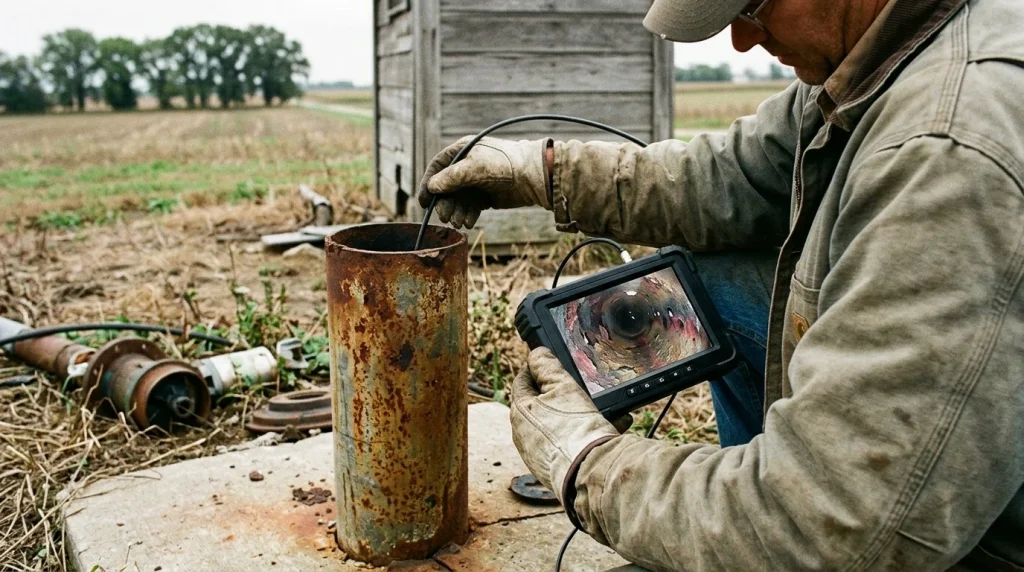
A downhole camera allows technicians to inspect the inside of the casing for rust, pitting, holes, cracks, or deformation without removing the entire well system. This assessment aids in pinpointing the damage’s location and extent prior to suggesting repairs.
Water Quality Testing
Laboratory testing checks for bacteria, iron, manganese, sediment, and other contaminants that may enter through a damaged casing. Water testing also helps determine if corrosion has begun affecting drinking water quality.
Pump Performance Evaluation
Technicians also evaluate pump operation, water pressure, flow rate, and pump cycling. Excess sediment caused by casing deterioration can accelerate pump wear and reduce overall system efficiency.
Structural Assessment
The exposed section of the casing, well cap, sanitary seal, and surrounding ground are carefully examined for movement, corrosion, or openings that could allow contaminants to enter the well.
Repair Options for Corroded Well Casings
The appropriate repair depends on the extent of corrosion and the overall condition of the well.
Casing Liners
When corrosion is limited to certain sections, contractors may install a liner inside the existing casing. The liner creates a new protective barrier that restores the well’s structural integrity while extending its service life.
Partial Repairs
Localized corrosion or isolated holes may sometimes be repaired without replacing the entire casing. Professional inspections determine if this option is suitable.
Complete Replacement
Extensive corrosion, severe structural damage, or repeated contamination may make well casing replacement in Texas the safest long-term solution. Replacing the casing or constructing a new well helps restore water quality and dependable performance when repairs are no longer practical.
Ongoing Monitoring
After repairs are completed, periodic inspections and routine water testing help detect new problems before they become serious.
Can Corrosion Be Prevented?
Although steel casing naturally ages, proper maintenance can slow deterioration and reduce the likelihood of major failures.
Schedule Regular Inspections
Older wells benefit from routine professional inspections, especially after decades of service. Early detection often allows less extensive repairs.
Test Water Annually
Annual laboratory testing helps identify changes in bacteria, minerals, and water chemistry that may indicate developing casing problems.
Protect the Wellhead
Keeping the wellhead properly sealed and free from standing water reduces the risk of contaminants entering around the casing.
Address Problems Promptly
Rust stains, cloudy water, sediment, or declining water production should never be ignored. Timely repairs assist in avoiding additional harm and safeguarding groundwater quality.
When Should a Well Casing Be Replaced?
Not every corroded casing requires immediate replacement. Many wells can continue operating safely after professional repairs. However, replacement may become necessary when:
- Corrosion has created multiple holes or large perforations.
- The casing has partially collapsed.
- Water repeatedly tests positive for contamination.
- Pump damage continues because of sediment intrusion.
- Repairing is no longer more economical than replacing.
FAQS
What Causes a Well Casing to Corrode?
Steel well casings corrode over time because of natural reactions with groundwater, oxygen, minerals, and surrounding soil conditions. Acidic water and high mineral content can accelerate the corrosion process.
Is Rust-Colored Water Always Caused by a Corroded Well Casing?
No. Rust-colored water may also result from naturally occurring iron, iron bacteria, or household plumbing corrosion. Professional water testing and a casing inspection help determine the actual cause.
Can a Corroded Well Casing Be Repaired?
Yes. Depending on the extent of the damage, repair options may include casing liners, localized repairs, or full casing replacement. A downhole camera inspection helps determine the most appropriate solution.
Bottom Line
An older well casing can continue providing dependable service for many years, but corrosion should never be overlooked. Rust-colored water, sediment, metallic taste, declining water production, and visible deterioration around the wellhead often indicate that the casing requires professional attention. Routine inspections, annual water testing, and timely repairs help protect water quality, extend the life of the well, and reduce the risk of expensive structural failures. Addressing corrosion early is the most effective way to maintain a safe and reliable private water supply.
Contact 77 Water Well today and get trusted guidance from experienced well water experts who can inspect your system and recommend the right solution.